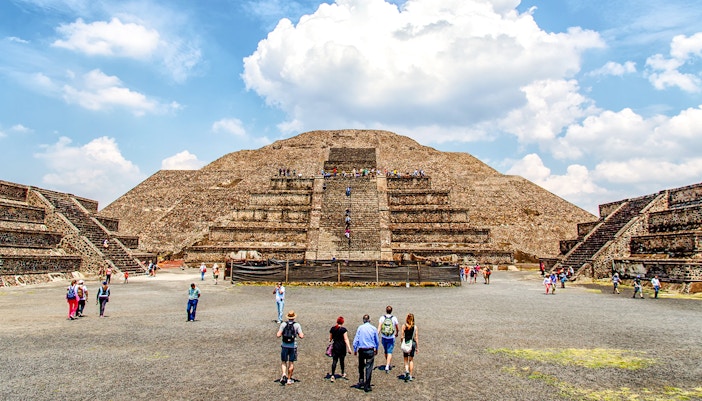
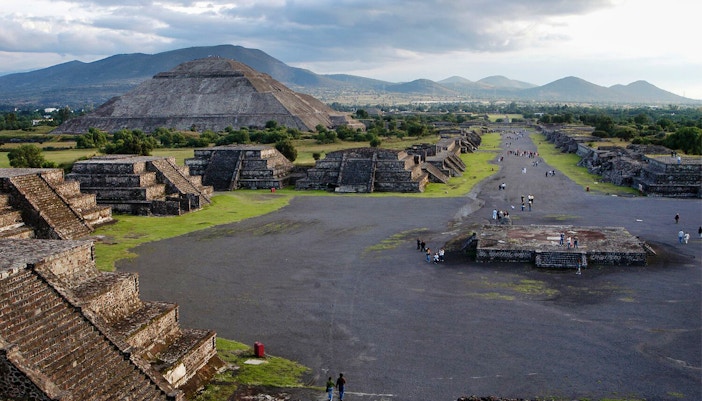
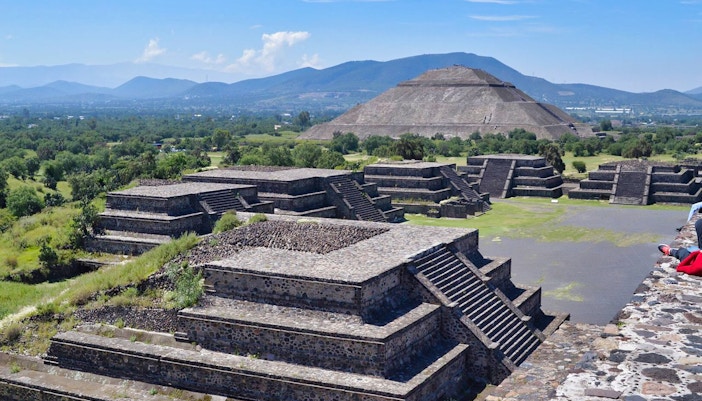
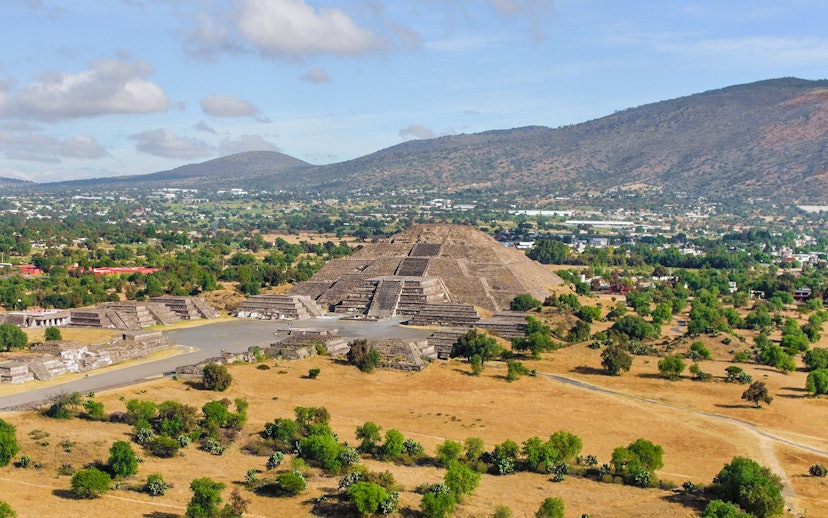
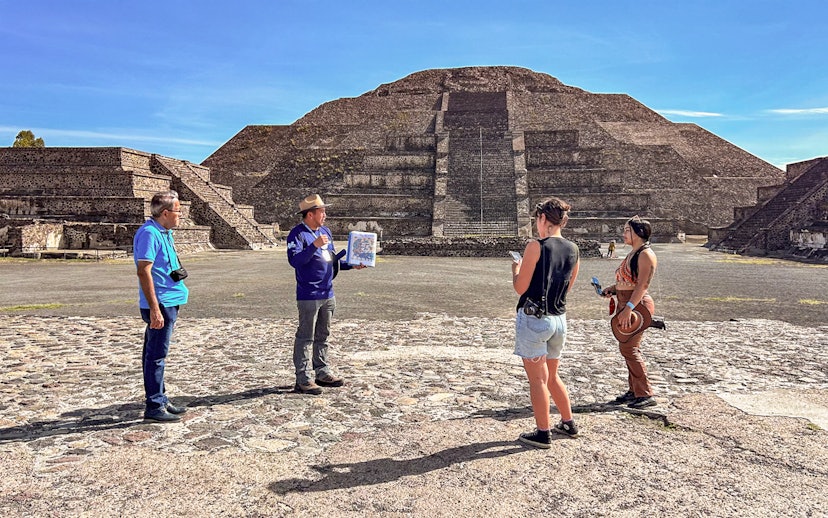
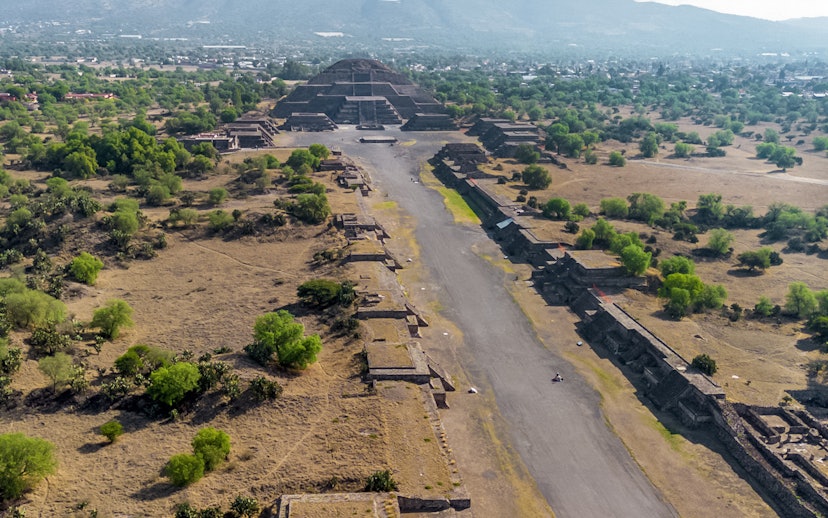
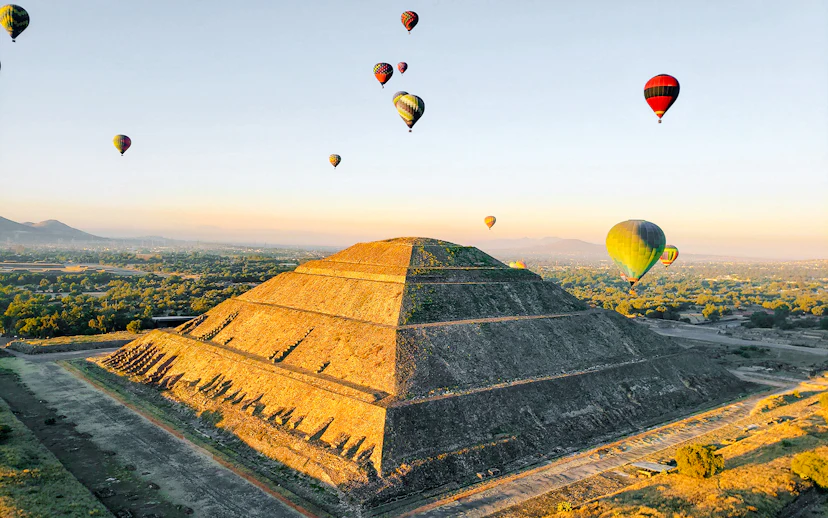
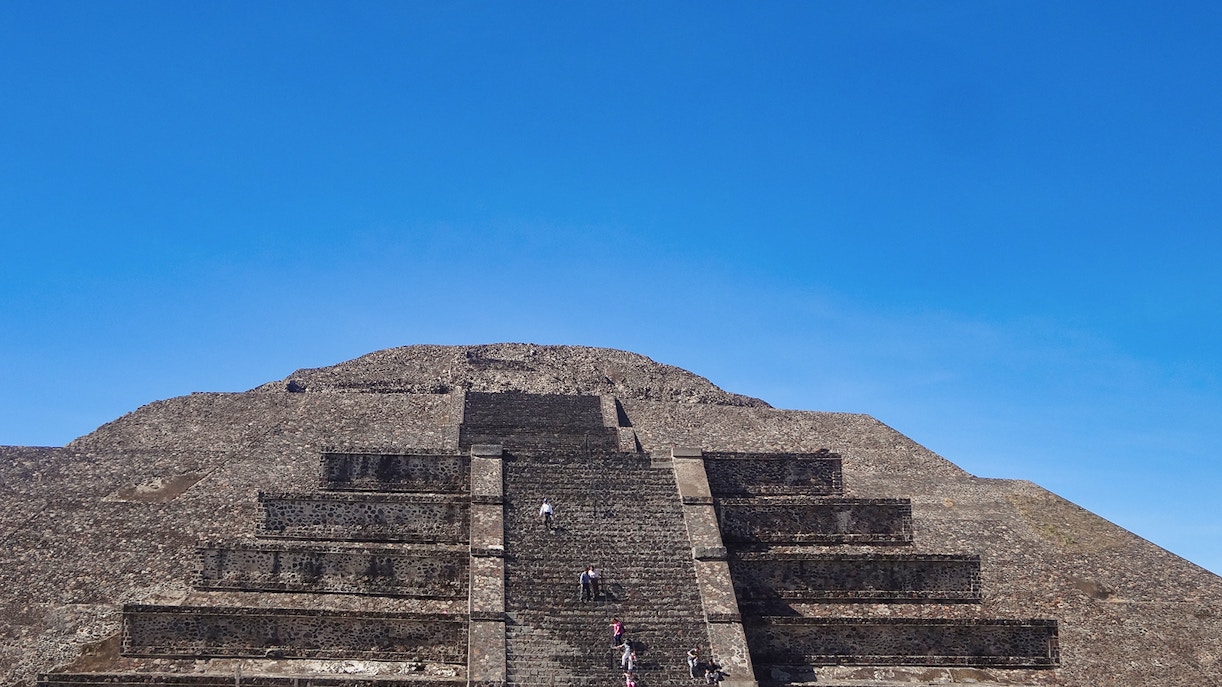
The largest pyramid in Mesoamerica rises 65 meters high. Climbing it feels like a journey toward the heavens, every step once part of a sacred pilgrimage. At the top, the city unfolds beneath you, lined perfectly with the Avenue of the Dead.
Inside Teotihuacán pyramids | Walk through Mexico’s city of the gods
Step inside Teotihuacán and you’re walking through the veins of an ancient empire. Once the largest city in the Americas, this UNESCO site hides more than colossal pyramids, it’s a labyrinth of plazas, altars, murals, and forgotten rituals.
- Must-see: The Pyramids of the Sun and Moon, Temple of the Feathered Serpent, and the Avenue of the Dead.
- Hidden gem: Tepantitla Palace, where colorful murals show a paradise ruled by rain god Tlaloc.
- Pro tip: Go early, around 8 am, to explore the site before the midday sun hits. Skip-the-line tickets or guided tours save you hours of waiting.
What to expect inside Teotihuacán Pyramids
Stepping inside Teotihuacán feels like entering a world built for the gods. Its grand avenues and sacred pyramids reveal a civilization that engineered not just stone but belief. Beyond the views, every wall and staircase holds stories of creation, power, and ritual life.
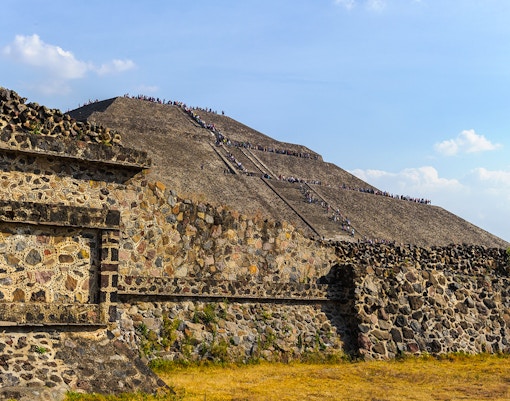
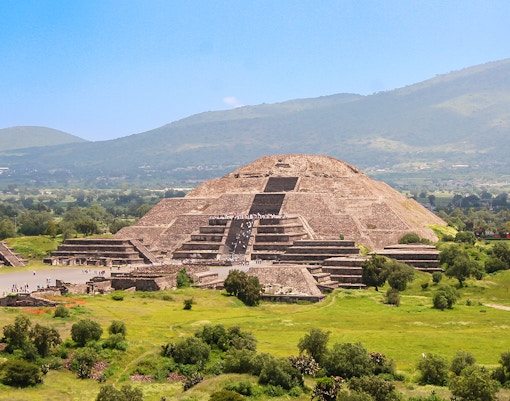
Pyramid of the Moon – The mountain that watches
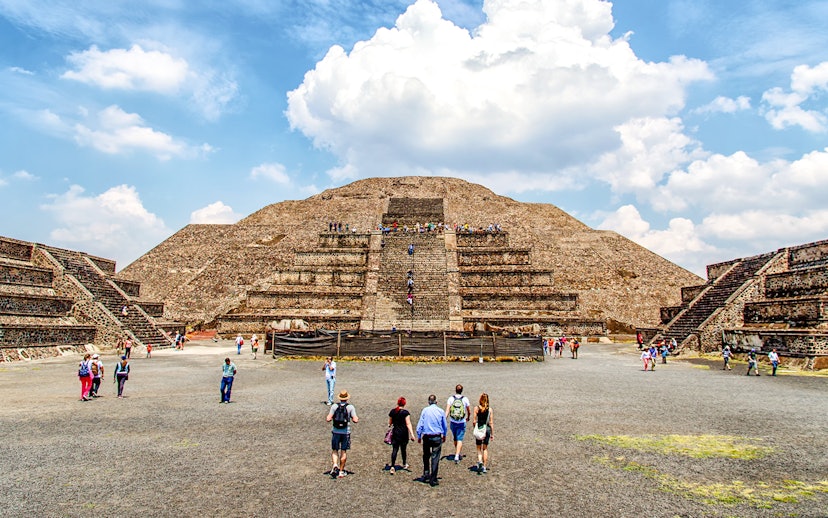
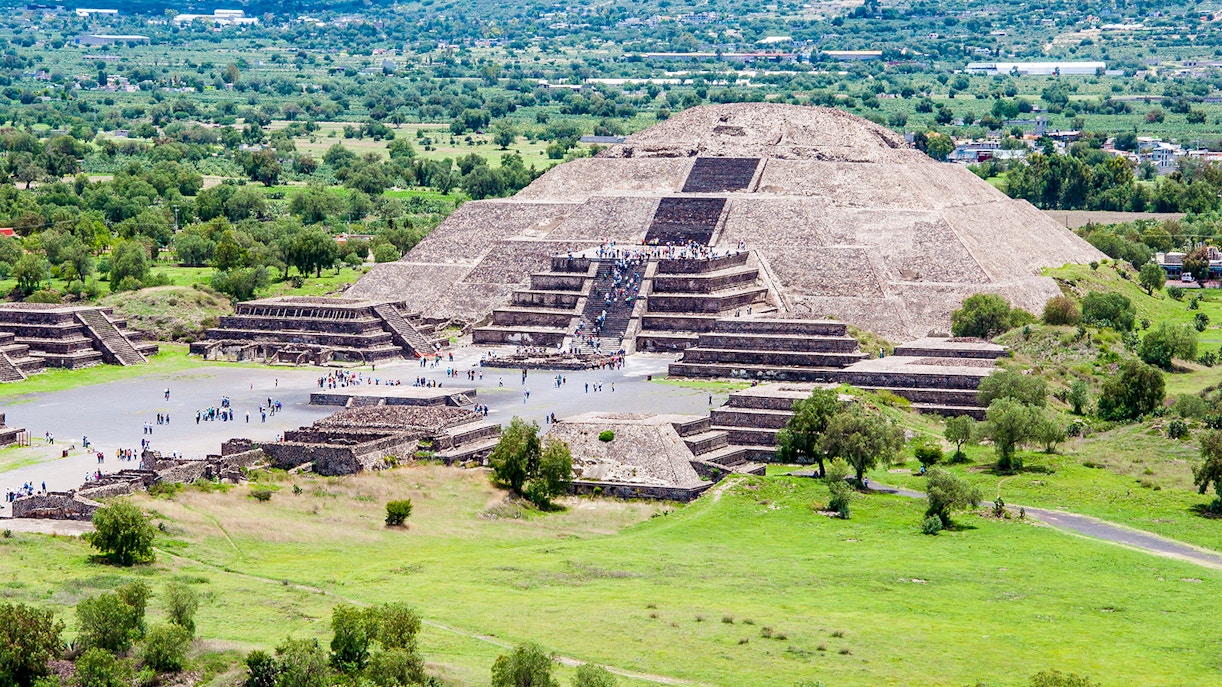
Framing the northern end of the avenue, the Moon Pyramid was dedicated to the Great Goddess of Teotihuacán. Its base hides altars and tombs of high-ranking figures. From its summit, the view aligns with Cerro Gordo mountain, an ancient symbol of fertility and life.
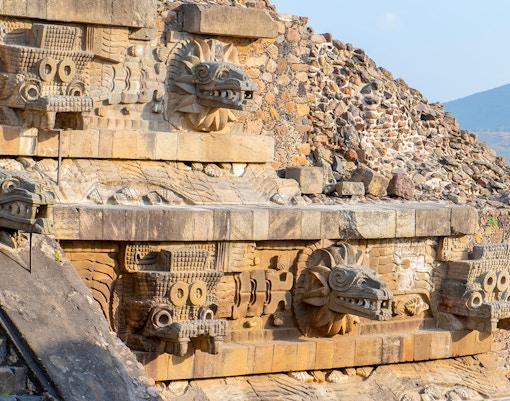
Temple of the Feathered Serpent – Sacred carvings and mysteries
This temple inside the Citadel complex is covered with stone serpents and shell motifs, representing Quetzalcóatl, the god of wind and creation. Archaeologists found hundreds of offerings here — a reminder of the rituals that once shaped the city’s destiny.
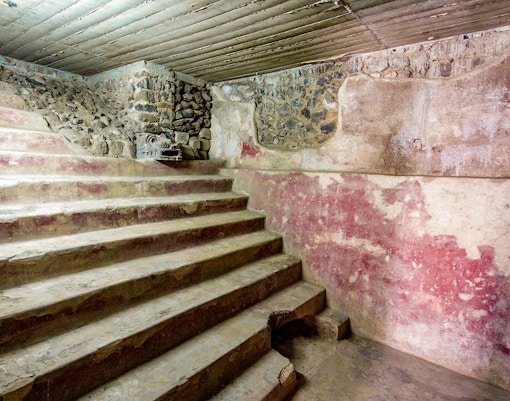
Murals, tunnels, and living colors
Inside Teotihuacán’s palaces, walls burst with frescoes of jaguars, butterflies, and deities. Beneath the Pyramid of the Feathered Serpent lies a hidden tunnel discovered in 2003 — thought to symbolize the underworld. You can’t enter the tunnel, but guided tours reveal its story through reconstructions and findings at the on-site museum.
How to explore the Teotihuacán pyramids
Getting inside Teotihuacán isn’t just about ticking off pyramids, it’s about pacing your steps, feeling the silence between the stones, and knowing how to move through a city built for gods. Here’s how to do it right.
Book your tickets online to skip long queues at the gate. You’ll need to present your confirmation (digital or printed) and a valid photo ID. Entry opens around 8am, and it’s best to arrive early before the tour buses pull in.
If you’ve booked a guided tour or full-day experience, your entry is handled for you, your guide will meet you either in Mexico City or Teotihuacán, depending on your ticket type.
💡 Tip: The site has five entrances, but Gate 1 and Gate 2 are closest to the Pyramid of the Sun and the museum. Most tours start here.
Mornings between 8am and 10am are ideal, the light is soft, the air is cool, and you can climb the pyramids without crowds. Late afternoons after 3:30pm also offer gentle sun and great photo light, especially from the Moon Pyramid.
Avoid midday hours (11am–2pm) unless you’re on a guided tour with shade breaks, it gets scorching.
If you’re planning to fly a hot air balloon, aim for the sunrise slot — it’s breathtaking and gives you first access to the ruins afterward.
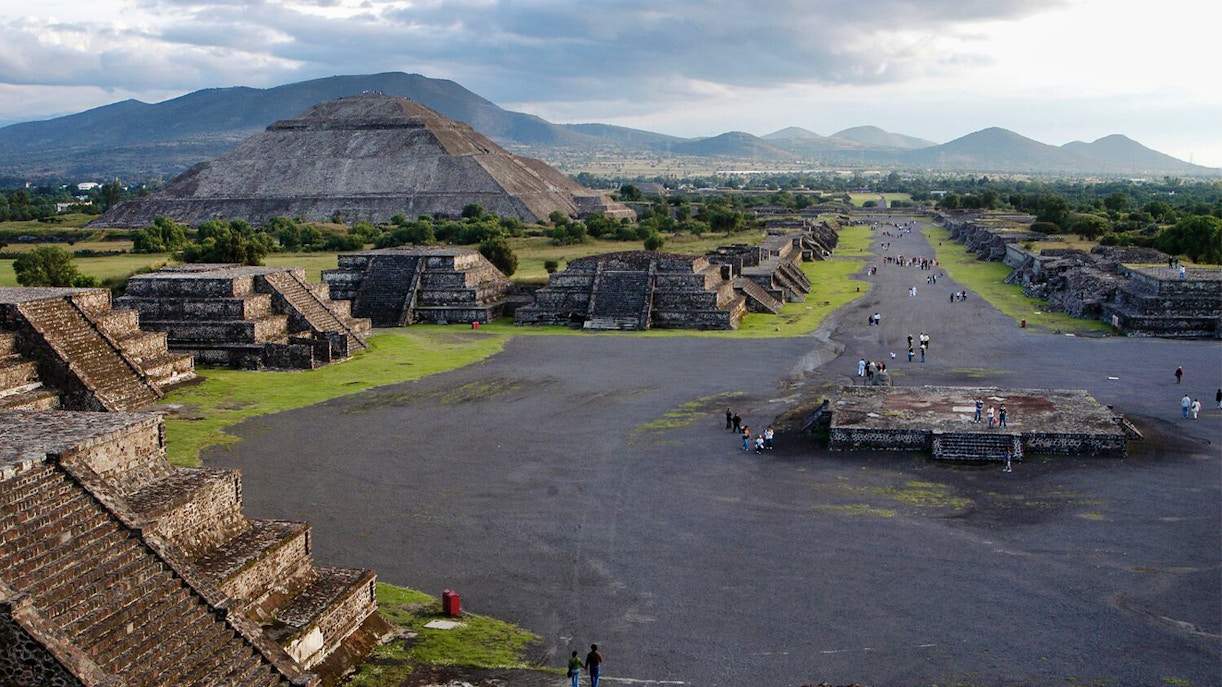
- Quick visit: 1.5–2 hours – Walk the Avenue of the Dead and see the Sun and Moon Pyramids.
- Standard visit: 3–4 hours – Add the Temple of the Feathered Serpent, murals at Tepantitla, and the museum.
- Full-day tour: 6–8 hours – Explore the site with a guide, stop for local crafts, taste pulque or mezcal, and visit the Basilica of Guadalupe or Tlatelolco.
💡 Tip: The site is large — nearly 8 square kilometers. Bring comfortable shoes and a hat.
- No climbing beyond permitted sections (marked with signs).
- Drones, tripods, and large camera equipment require special permits.
- No food or drinks beyond water bottles inside pyramid zones.
- Modest clothing and sturdy footwear recommended.
- Always follow staff directions, some areas are closed for preservation.
60-minute highlights trail:
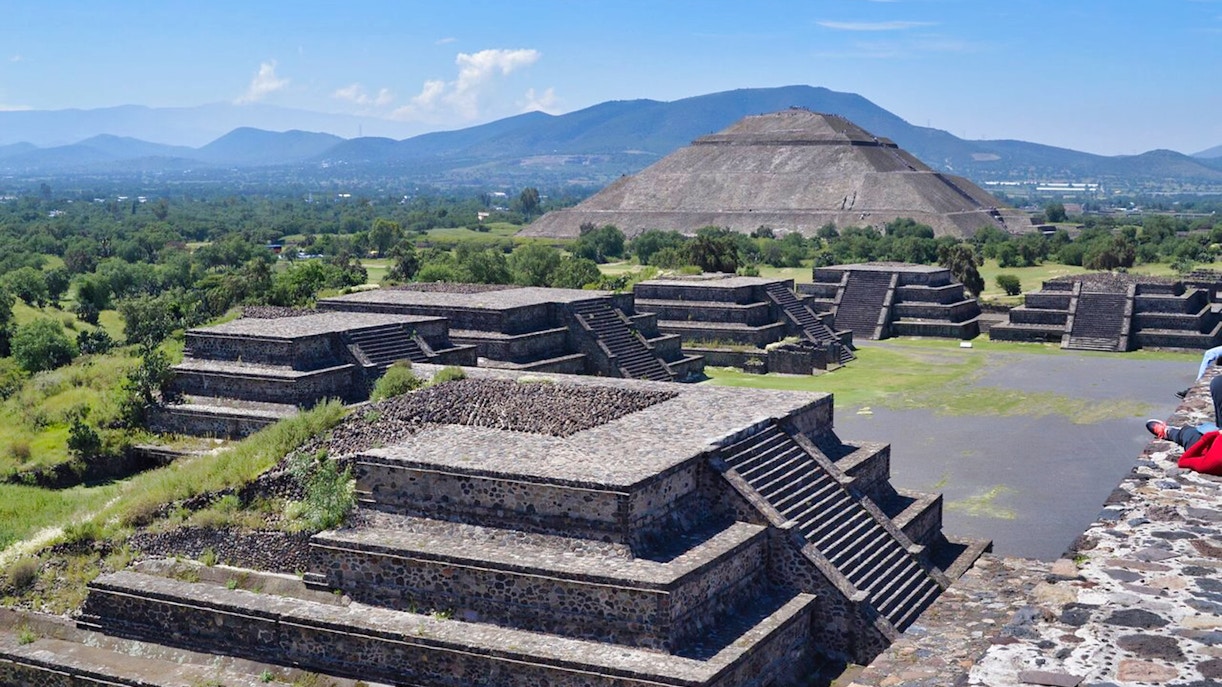
Enter from Gate 2 → Walk the Avenue of the Dead → Climb the Pyramid of the Sun → End with a view from the Moon Pyramid.
2-hour exploration route:
Start at Gate 1 → Visit the Citadel and the Temple of the Feathered Serpent → Walk up to the Pyramid of the Sun → Explore Tepantitla Palace murals.
Half-day guided route (recommended):
Join a morning tour from Mexico City → See Tlatelolco and Guadalupe Shrine → Arrive early at Teotihuacán → Explore the Pyramids of the Sun and Moon, Avenue of the Dead, and local workshops → Return by 4pm.
Frequently asked questions about what’s inside Teotihuacán Pyramids
You can explore the main site and climb parts of the Pyramids of the Sun and Moon, but you can’t go inside the stone structures themselves — they’re solid, built without inner chambers. The accessible areas include the surrounding temples, plazas, and ancient stairways.
Both pyramids have hidden tunnels and burial chambers that archaeologists have explored but are not open to the public. What you can see are the reconstructed terraces, altars, and ritual platforms that once held offerings to gods of creation and rain.
Visitors can freely enter the Avenue of the Dead, the Citadel complex, and palace ruins like Tetitla and Tepantitla, where original murals still survive. Guided tours often include the on-site museum that displays relics discovered beneath the pyramids.
Plan at least 2–3 hours for a self-guided walk through the pyramids and plazas. If you’re joining a guided tour from Mexico City, expect a full-day experience with stops at the Guadalupe Shrine and Tlatelolco included.
Yes. Many tours include direct entry to the archaeological site and take you around all main structures. Some even combine a morning balloon flight with an on-ground guided visit, so you see the pyramids from above and within the complex.