Teoti Huacan Tours


The Temple of Quetzalcoatl, also called the Feathered Serpent Pyramid, is one of the most striking structures in Teotihuacán. Unlike the massive scale of the Sun and Moon Pyramids, this temple captivates visitors with its detailed stone carvings and symbolic meaning. Dedicated to the feathered serpent deity Quetzalcoatl, it was the third-largest pyramid in the ancient city and once a focal point for rituals, offerings, and processions.

Why the Temple of Quetzalcoatl is unique

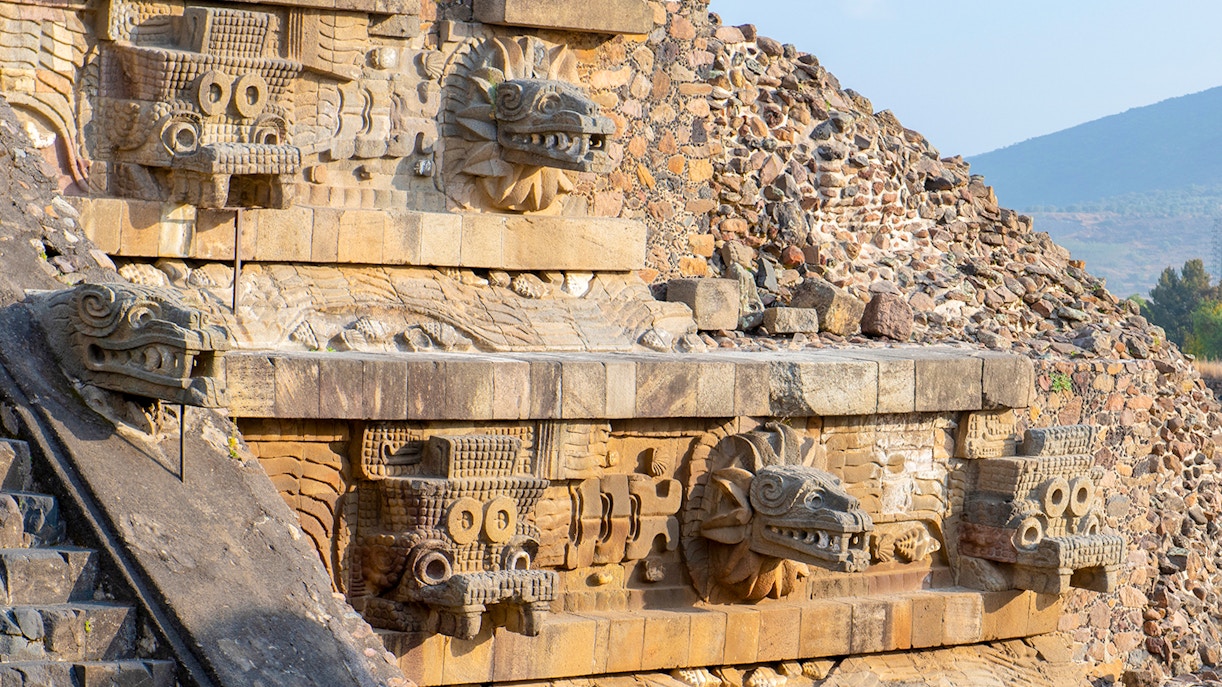
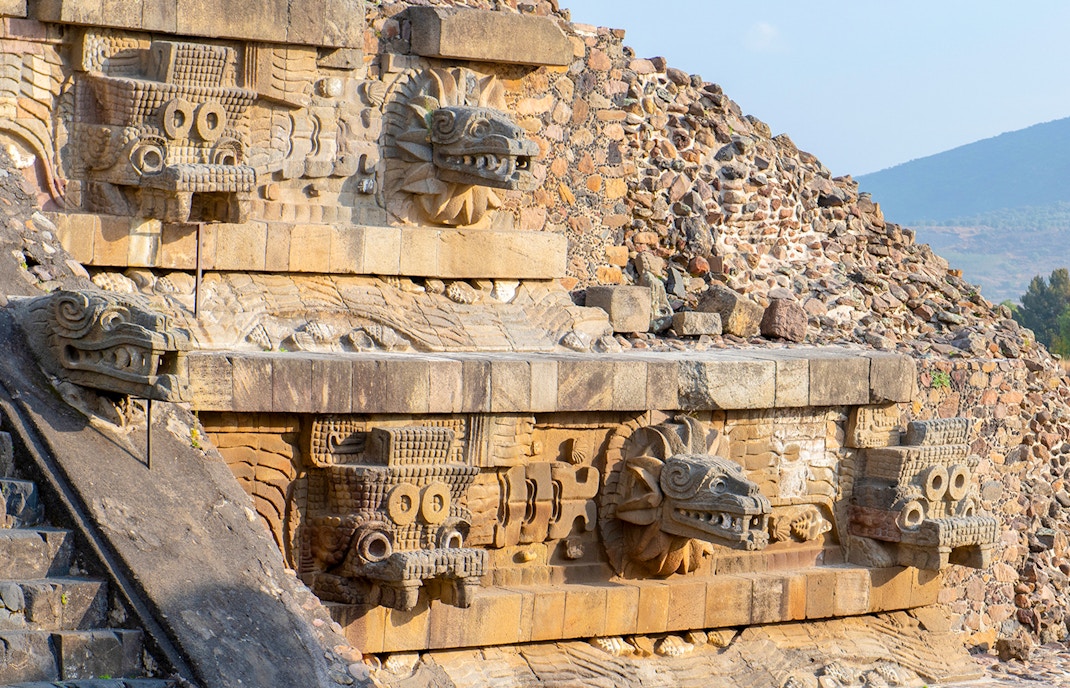
Temple of Quetzalcoatl with intricate carved stone serpent heads in Teotihuacan, Mexico.

The temple sits inside La Ciudadela, a vast sunken plaza that could hold thousands of people for ceremonies. Its walls are decorated with serpent heads and seashell motifs, representing water, fertility, and cosmic order. When archaeologists excavated the site, they discovered hundreds of human sacrifices buried beneath the steps, likely warriors offered to consecrate the pyramid. This makes it one of the richest archaeological finds in Mesoamerica.

Tip: Bring binoculars or use your camera zoom. The serpent heads are smaller than they appear in photos, but the details are mesmerizing up close.
What to see at the Feathered Serpent Pyramid

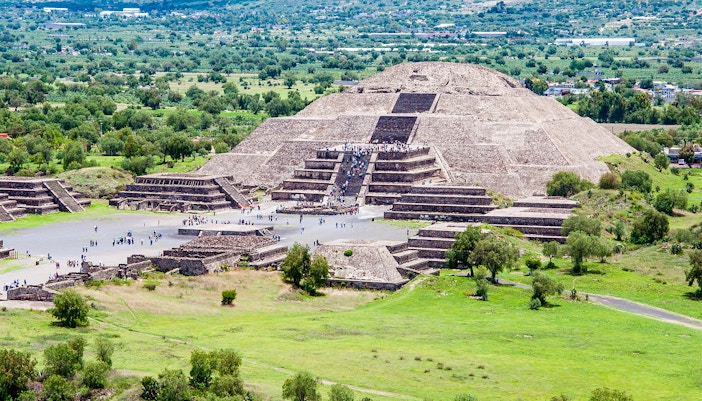
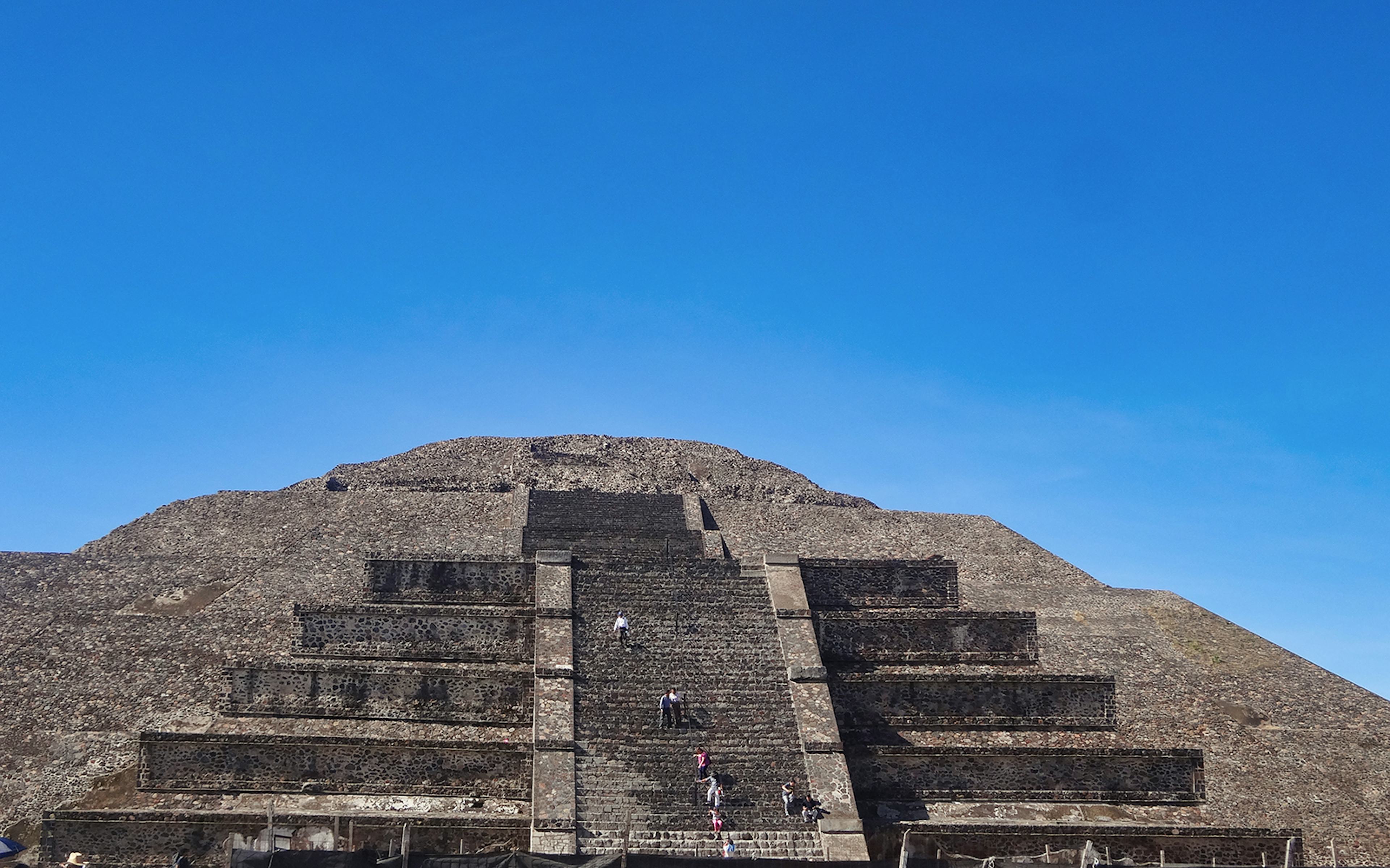
Visitors climbing the Pyramid of the Sun at Teotihuacan, Mexico under a clear blue sky.
1/4

Serpent Carvings

Look for alternating depictions of Quetzalcoatl and the goggle-eyed storm god, Tlaloc. Together, they symbolize the balance of earth, water, and sky.

La Ciudadela

The plaza surrounding the temple is massive. Stand at the center to feel the acoustics, your voice will echo through the square, just like it did during rituals.

Burial offerings

While you won’t see the original remains (they’re preserved by archaeologists), panels and signs explain the human sacrifices found here, giving context to the temple’s sacred role.

Murals and reconstructions

Some of the best-preserved fragments are housed at the Teotihuacán Museum inside the archaeological zone, where you can see close-ups of the colors that once covered the temple.

How to include it in your visit

The Temple of Quetzalcoatl is located near the southern end of the Avenue of the Dead. It’s usually the first major structure you’ll encounter if you enter from Gate 1. Most guided tours stop here before leading visitors toward the Pyramid of the Sun. If you’re exploring on your own, plan about 30–40 minutes to wander the plaza, examine the carvings, and soak in the atmosphere.

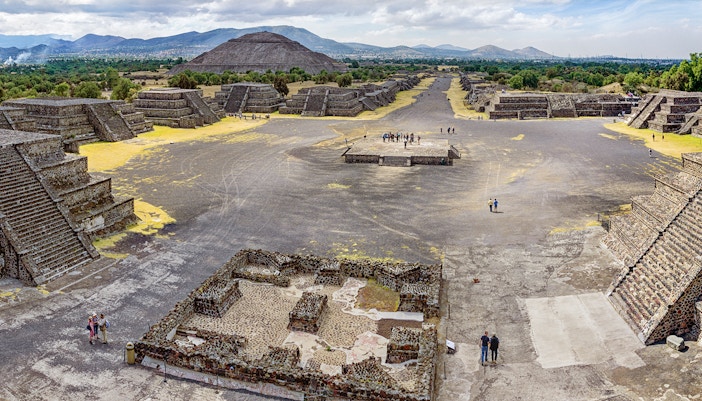
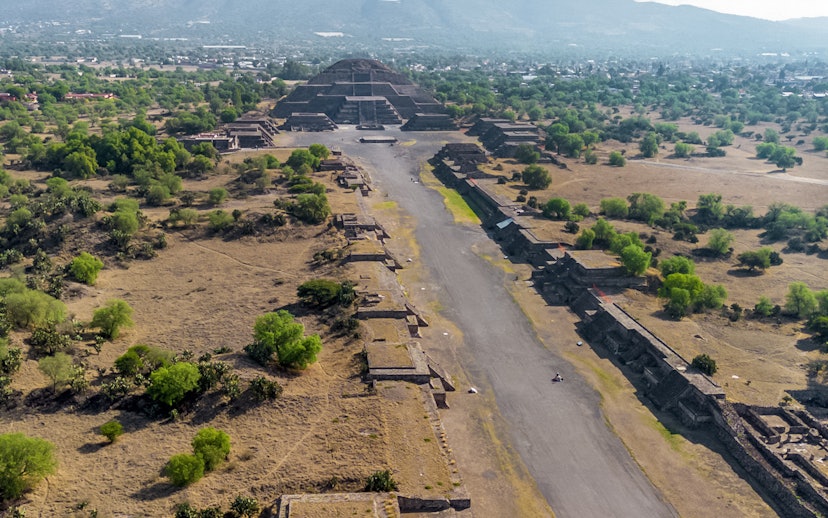
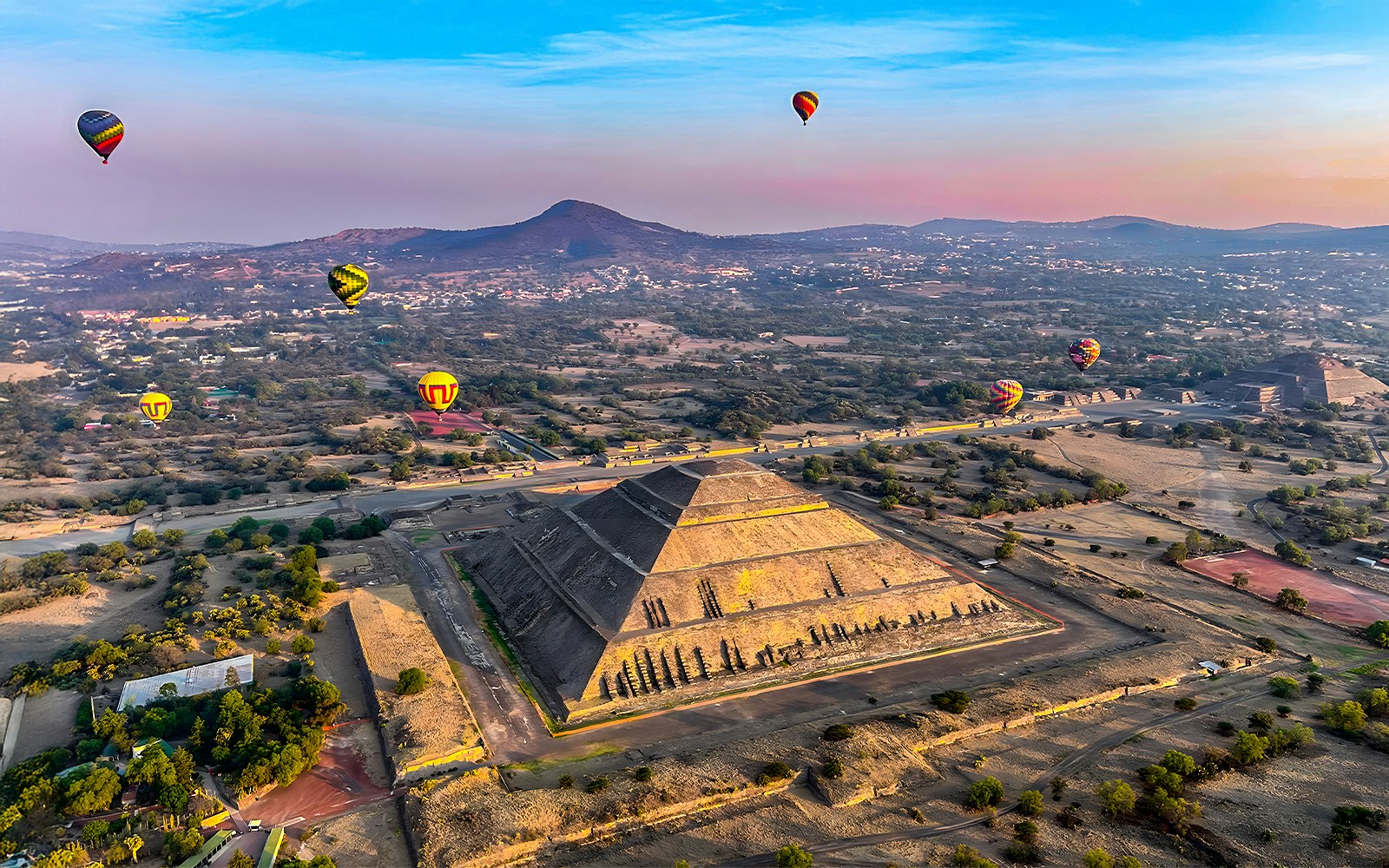
Teotihuacan pyramids and Avenue of the Dead with visitors exploring the ancient site in Mexico.

Practical visiting tips

  • Best time to see it: Early morning, when sunlight hits the carved serpent heads and makes their details pop.
  • Photography tip: Stand at a diagonal angle rather than head-on for dramatic shadow play on the carvings.
  • Footwear: Surfaces here are uneven with exposed stones. Comfortable walking shoes make a big difference.
  • Guides: Since the pyramid’s story is steeped in symbolism, a guided tour adds context you might miss if visiting alone.

Practical visiting tips for the Temple of Quetzalcoatl

Temple of Quetzalcoatl with intricate carved stone serpent heads in Teotihuacan, Mexico.
  • Best photo angles nobody tells you about: Don’t shoot the temple straight on—it flattens the carvings. Instead, walk to the far-left corner of La Ciudadela and crouch low. From this angle, you can capture the serpent heads with the Avenue of the Dead stretching behind them, which adds depth and context. Morning light hits from the east, so faces on the left side glow better in photos.
  • Golden hour magic: Most tourists rush to the Sun and Moon pyramids for sunrise, but late afternoon is when this temple shines. Around 4pm, shadows fall into the carved seashells and serpent crests, making them stand out in photos. If you’re vlogging, this is when you’ll get the most dramatic contrasts.
  • Frame the serpent heads with the sky: Use the wide plaza to your advantage. Kneel down, tilt your camera upward, and frame the serpent heads against blue sky instead of stone. This makes the details pop and avoids messy backgrounds full of tourists.
  • Audio hack for vloggers: La Ciudadela has insane acoustics. Stand at the center, clap, and record the echo—it’s eerie and cinematic. Great for adding atmosphere to your travel video or Insta story.
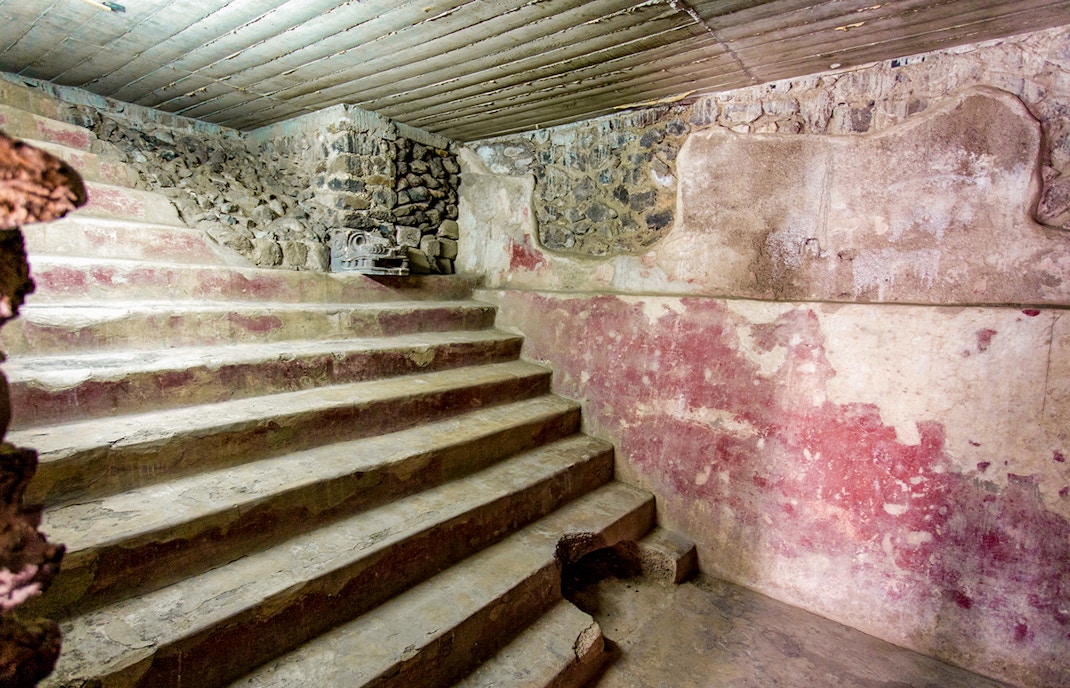
Stone steps and red murals inside the Jaguar Palace, Teotihuacan, Mexico.
  • Skip the crowds with a micro-shift in timing: When groups arrive from Mexico City tours, this spot gets packed for about 20 minutes. If you see a bus unload, hang back near the plaza walls. Within half an hour it clears out, and you’ll get uncluttered shots.
  • What gear to bring:
  • A zoom lens or phone telephoto mode helps capture serpent details that are hard to see with the naked eye.
  • A wide-angle lens lets you fit both the carvings and the sheer scale of La Ciudadela in one frame.
  • Polarizer filter = richer skies and sharper stone contrast.
  • For vlogging, bring a wind muff—the open plaza gets gusty, and audio can get ruined.
  • Best “secret” seat for breaks: On the far-right side of La Ciudadela, behind a stone platform, there’s a shaded ledge where hardly anyone sits. It’s perfect for setting up your tripod for time-lapse shots without foot traffic in the frame.
  • Social content idea: Do a “before and after” reel: film the serpent heads in harsh midday light, then again at 4pm. Put them side by side—you’ll instantly show why timing matters at Teotihuacán.

Frequently asked questions about Temple of Quetzalcoatl

No. Unlike the Sun and Moon Pyramids, climbing has never been allowed here because of its carvings and fragility.